
Why AI Models Struggle With Changing Camera Angles (Especially When We Give Them a Reference Photo)
Why AI Can Transform a Photo but Still Can’t Change the Camera Angle

Photographers work in a world shaped by optics, physics, and camera position. Raise the tripod, move two feet to the left, or tilt the camera slightly, and the photograph changes. That’s how the medium behaves.
AI imaging tools don’t share that foundation.
This article looks at a common assumption many photographers make when they begin using reference images in AI systems:
If the model sees my photo, it should be able to show the same subject from a different angle.
It sounds reasonable. It’s not. In practice, it almost never works.
The Photographer’s Assumption
“Here’s my photo… now change the view.”
We’re used to thinking in terms of camera movement. But AI doesn’t treat a reference photo as a 3D object. It treats it as a flat collection of colors and shapes.
So when you tell it:
“Show this from above,”
“Rotate the camera,”
“Move the viewpoint,”
You’re actually asking the model to invent all the hidden geometry the original photo doesn’t show; something today’s tools aren’t capable of doing accurately.
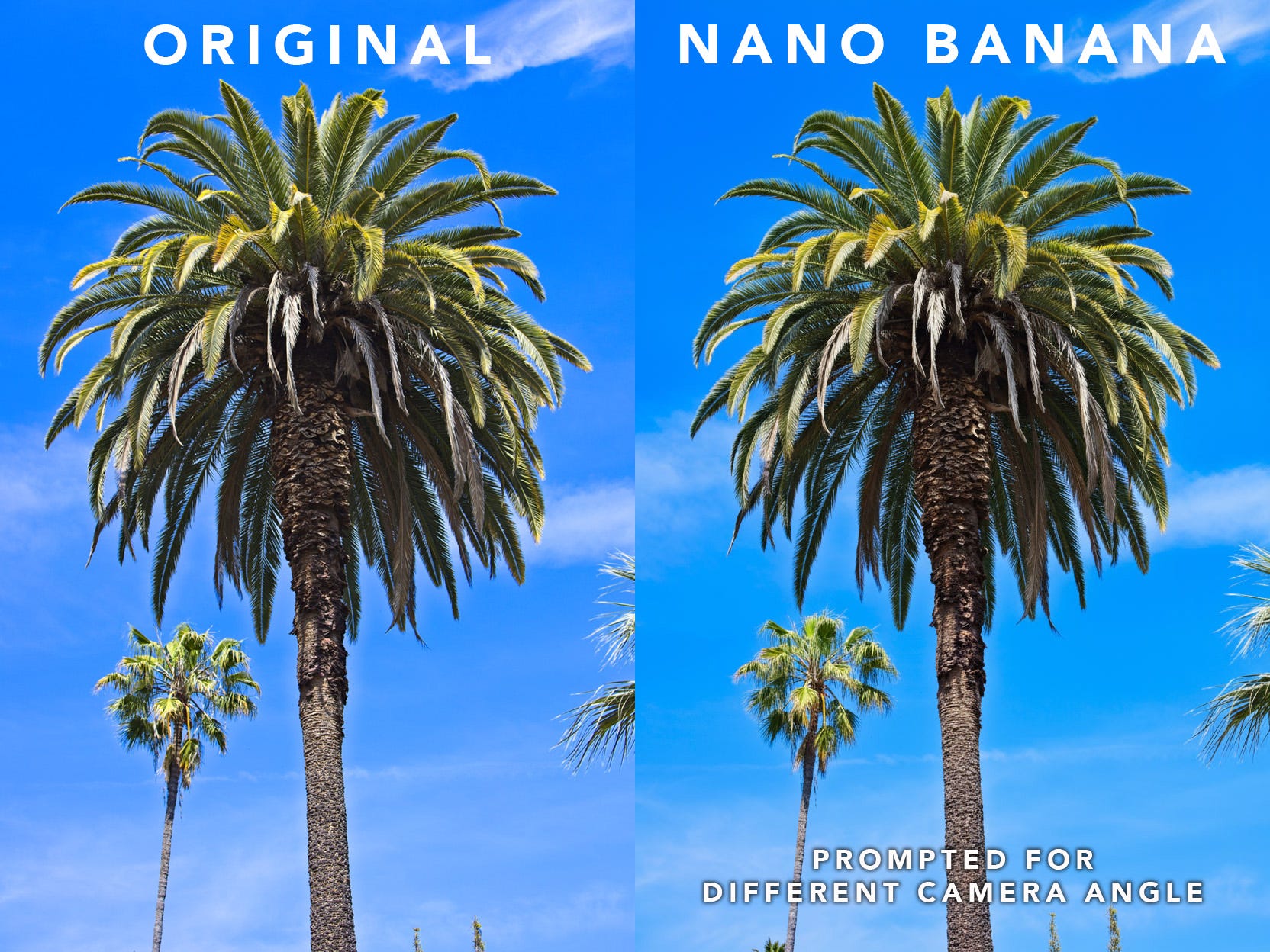
Even this detailed prompt didn’t alter the view: Using the attached image as the reference for trunk shape, color, frond patterns, and overall structure, generate a new view from a drone positioned at the height of the crown, looking horizontally. The tree should remain the same species, proportions, and character, but the viewpoint can be interpreted and approximated.
For paid subscribers, we explain a lot more about this and why it’s so, below. Upgrade today for immediate access to this and all our exclusive content.